


Parenting Guidance for Families
A holistic approach focused on the child...and their parents
Understanding Your Child Differently — Through the Body, Emotions, and Senses
Every child grows at their own pace, with a unique sensory, motor, emotional, and relational profile.
But sometimes, a child’s development can raise questions, cause confusion, or challenge the parent-child relationship.
Through parenting support grounded in psychomotricity, I help you better understand your child’s needs and behavior, offering gentle and concrete tools to support their development and strengthen your connection.
Parenting isn’t about being perfect — it’s about doing your best, often with limited guidance.
When a child’s behavior or development raises concerns, it’s completely normal to feel lost, worried, or alone in making the right decisions.
As a psychomotor therapist , I offer parenting guidance sessions that focus on observing and understanding your child’s motor, sensory, and emotional development. These sessions help you make sense of your child’s reactions and strengthen the parent-child bond, with practical tools and a supportive, non-judgmental approach.
Is Parenting Guidance Right for You?
Parenting guidance is for all parents — in any context — who may be facing challenges in their parenting journey, or simply wish to strengthen their parenting skills. It is especially beneficial for parents of children with special needs or neurodevelopmental conditions such as ADHD, autism spectrum disorder (ASD), and sensory processing challenges.
Research consistently highlights the effectiveness of parenting support in helping children reach their full social, cognitive, and emotional potential, particularly in the context of neurodiversity
For parents looking for answers
You may feel helpless, worried, or uncertain about your child’s behavior or development.
For parents of neurodivergent children
For children with conditions such as autism spectrum disorder (ASD), ADHD, sensory processing difficulties, anxiety, or high potential, whose unique traits may impact your parent-child relationship.
WHAT YOU'RE EXPERIENCING TODAY
→ “He never listens!” You repeat the same instruction 7 times, raising your voice each time… but he still doesn’t respond.
→ “He gets angry over everything.” A broken cookie, wearing the red sweater instead of the blue one, hearing “no”…
→ “He says no to everything.” The famous “no” phase… that’s been going on for 3 years.
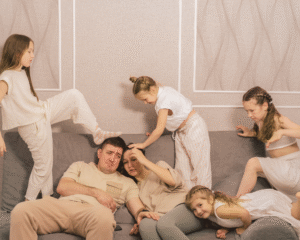
→ “He can’t sit still.” Your child runs, climbs, jumps, talks, moves… even when it’s bedtime.
→ “He throws tantrums over candy.” Grocery store trips are a nightmare: screaming, rolling on the floor…
→ “Bedtime takes forever.” When “Go to bed” means 2 hours of negotiation, a story, a glass of water, and 3 bathroom breaks.
→ “He behaves differently at home and school.” At school: model student. At home: little emotional tornado.
→ “I feel overwhelmed and don’t know how to respond.” Tired, doubtful, feeling parental guilt? You’re doing your best, and that already means a lot.
WHAT WE AIM TO ACHIEVE TOGETHER
→ Parenting guidance to learn how to give clear and effective instructions.
→ Work on emotional regulation and strategies to defuse tantrums and crises.
→ Explore opposition, self-assertion, and especially how to set boundaries without burning out.
→ Support to channel your child’s energy, organize calming breaks, and adapt expectations to their motor pace.
→ Address emotional management in overstimulating environments and learn to detach from others’ judgments.
→ Create a reassuring and consistent routine tailored to your child’s sensory and emotional profile.
→ Explore differences in family dynamics and how to adjust your home environment without feeling inadequate.
→ Parenting guidance is a safe space to breathe, reflect, gain tools, and feel supported.
→ Restore your confidence as a parent.
My Psychomotor Approach to Parenting Guidance
My perspective as a psychomotor therapist helps you better understand your child’s unique personality through the lens of their motor, sensory, cognitive, and emotional development.
My expertise in psychomotricity makes this parenting guidance especially tailored to support children with neurodiverse profiles.
Understanding how your child functions allows you to adjust your approach without exhaustion, connect with them in new ways, and restore calm and harmony in your relationship.
Parenting guidance provides a helpful boost to support you in navigating challenging situations.
If this guidance alone is not enough, it may be beneficial to complement it with follow-up care from other professionals whose expertise matches your specific needs—such as speech therapists, psychologists, educators, or medical doctors.
My support is always part of a holistic, multidisciplinary approach to addressing your child’s difficulties.
FEES
Parenting Guidance
3 month support program
→ Initial consultation: 1 hour
→ Tailored made 2 follow-up sessions of 45 minutes each, spaced 3 weeks apart
→ Ongoing email support throughout the follow-up period
FEES : 310 €
One-time session
→ Session duration: 1h
→ General informations
→ Frequency as needed
FEES: 120 €
Book your appointment easily, in the format that suits you best.
Some consultations take place in person at the Maison de Santé in Amsterdam, while others are available remotely via video call, depending on your needs and situation. For certain services, you have the choice between online or in-office sessions, offering you flexible and accessible support wherever you are!
Remote
Video Call
In-Person
At Maison de Santé – Amsterdam Zuid
FAQ – Parenting Guidance
FOR BABIES, CHILDREN AND TEENS
My child doesn't have a diagnosis — can I still book a consultation?
Yes, absolutely. A formal diagnosis is not required to benefit from support. Whether you have concerns about your child’s development, behavior, sleep, or emotional regulation, early support can help bring clarity and provide practical tools—regardless of a diagnosis.
Will you see my child during the parenting guidance sessions?
Parenting guidance sessions are primarily focused on supporting you, the parent. In most cases, I do not see the child directly during these sessions. However, I may ask for observations, videos, or insights from daily life to better understand your child’s needs and offer personalized strategies.
Would you like help phrasing a full FAQ entry or adding more questions?
Do both parents need to be present during the sessions?
While it’s not mandatory, it can be very helpful when both parents participate—especially for shared understanding and consistent implementation at home. That said, I also work with one parent alone, depending on your availability and family situation.
Would you like help building out the rest of your FAQ page?
Can the support be extended if needed?
Yes, absolutely. These session package is a structured starting point, but additional sessions can be scheduled if you feel the need for continued support. Together, we can adapt the follow-up based on your child’s progress and your family’s needs.
BLOG
A Psychomotor Approach to the Uniqueness of the Parents-Child Connection
Free movement
Free movement for a baby means allowing them to explore their physical abilities naturally, at their own pace, without being restricted by devices like bouncers or walkers. This approach, rooted in philosophies like the Pikler approach, encourages independence and supports cognitive, motor, and sensory development by giving babies safe spaces to move, roll, crawl, and explore their environment on their own.

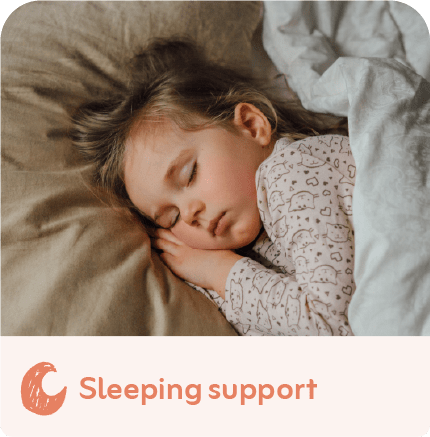
Sleep consulting-1001 sleeps
Baby sleep is a gradual, emotional process—not a performance or fixed timeline.
The 1001 Dodos® approach emphasizes gentle support, emotional security, and respect for each child’s rhythm.
Harsh sleep training is avoided in favor of calm routines, co-regulation, and presence.
Practical tools like sleep diaries and bedtime rituals help both babies and parents.
With compassion and guidance, even sleepless nights can feel more manageable.

Psychomotricité Amsterdam, KVK number: 77424557
IBAN: NL18BUNQ2042927120
AGB Code: 90094601
Numéro ADELI: 78 96 0267 9
Registered with the Dutch Psychomotor Therapy (PMT) association
FVB, Federatie Vaktherapeutische Beroepen organization, number: 113997
Emilie Martin-Chave – Copyright- All rights reserved
CONTACT
Hygiëastraat 8
1076 RM Amsterdam
Overview of the support journey
Because every family, every child, and every developmental situation is unique, I offer progressive parenting guidance through a series of 3 sessions spread over approximately 3 months.
This format allows you to:
→ Establish a clear and reassuring boundaries for parents
→ Test practical adjustments in daily family life
→ Observe the effects over time, without pressure or urgency
→ Gradually adapt the approach based on the needs of both the child and parents
Each session is part of a collaborative process, grounded in a holistic psychomotor approach addressing motor, sensory, emotional, and relational development.
01
Initials Assessment
→ In-depth interview: child’s history, sensory processing, physical needs, and family environment.
→ Identification of the core issues.
→ Highlighting motor, emotional, and relational challenges.
→ Offering a fresh, comprehensive perspective on the situation.
→ Providing initial practical strategies and recommendations.
02
Effective Strategies
→ Review of initial strategies tried at home
→ Sensory adjustments tailored to your child’s needs
→ Collaborative development of physical routines
→ Creation of emotional regulation tools
→ Recommendations for sensory or physical adaptations as needed
03
Refine and Consolidate
→ Answers to your questions, doubts, or challenges between sessions
→ Review of observed changes and progress
→ Reinforcement of new practices
→ Adaptation and fine-tuning of strategies
→ Referral to other specialists if needed
Have a question? Be sure to check our FAQ